
Cymatics experiments have fascinated me ever since I first saw sand leap and twist into perfect shapes with nothing more than sound. It’s wild to see invisible frequencies made visible, almost like peeking into a secret world buzzing around us. If you’re interested in practical philosophy, personal transformation, or you love science and art, exploring cymatics offers an unexpected doorway into all three.
What Cymatics Really Is, and Why It Matters
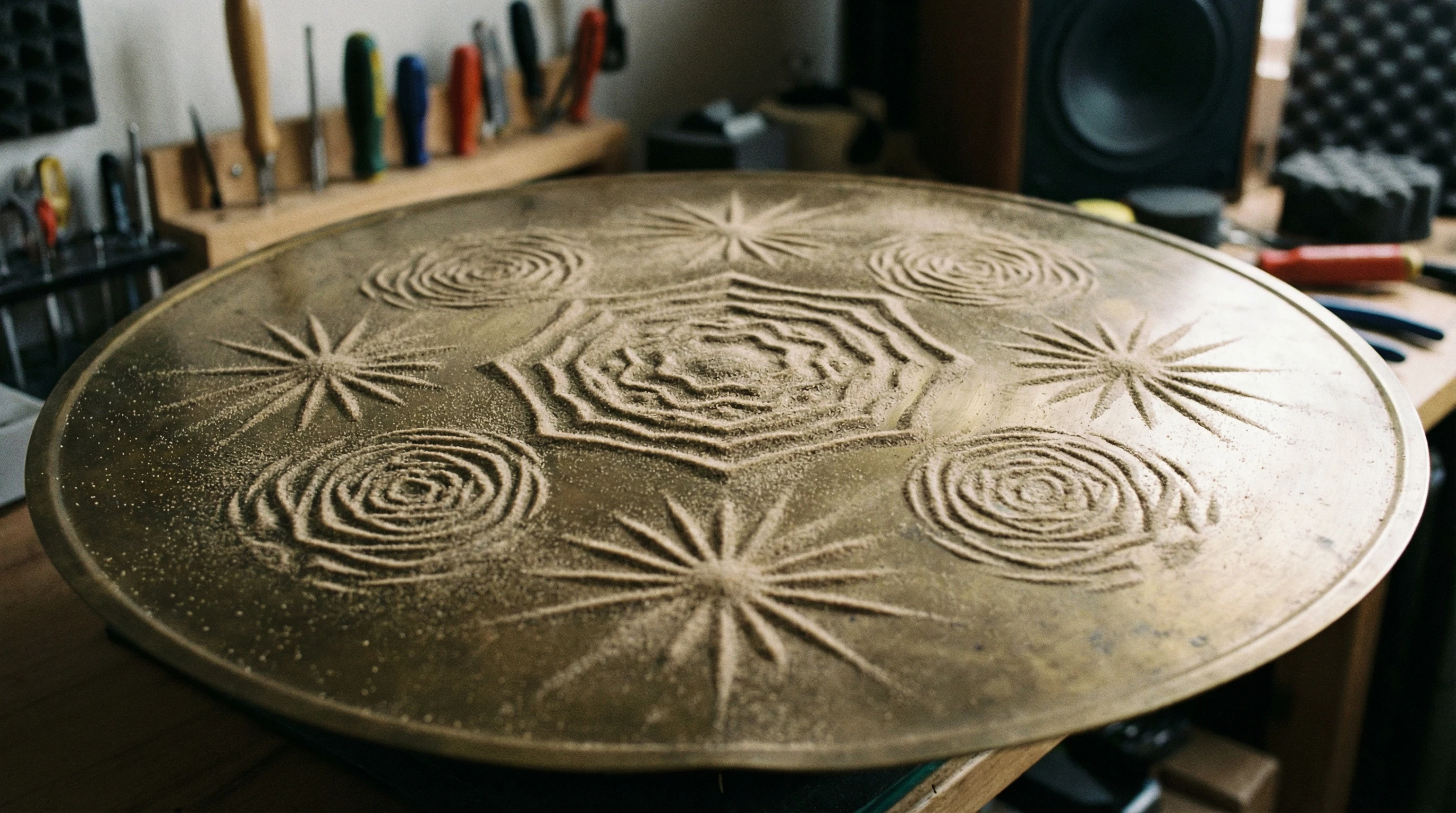
Cymatics is the study of visible sound and vibration. The word comes from the Greek “kyma” (wave), and these experiments often involve sending sound through surfaces covered with fine materials such as sand or salt. As the vibrations change, so do the patterns. It’s a hands-on way to interact with sound, much like meditative chanting or sound healing, except here you actually see the music.
For thousands of years, cultures have suggested that sound shapes reality. Ancient Hindu and Buddhist texts talk about cosmic vibrations. Pythagoras, the Greek mathematician, connected the numerical relationships of sounds (harmonics) to the fabric of the universe. Modern-day researchers, such as Dr. Hans Jenny (who popularized the field in the 1960s), have shown that this connection is real: sound frequencies do shape what’s on the plate in repeatable, beautiful ways.
What really grabs me about cymatics is how it blends the physical with the philosophical. You get proof, right in front of your eyes, that sound—something we often overlook—can literally reorganize matter. It’s tough not to wonder what repeated sound, music, or spoken words might be doing to us, too.
Setting Up Simple Cymatics Experiments at Home
Getting started with cymatics is more accessible than you might think. There’s no need for a science lab or expensive equipment. Here’s the basic gear I use:
- Flat metal plate or glass surface: A metal baking tray or an upturned speaker cone works well
- Fine materials for patterns, such as sand, salt, or lycopodium powder, show the shapes well.
- Audio source: A tone generator app on your phone, paired with a speaker touching the plate.
I prop the plate above a speaker, making sure it vibrates with the sound. Then, I lightly sprinkle sand across it. By playing different pure tones, like 100 Hz or 200 Hz, I watch as the sand jumps and forms geometric patterns called Chladni figures.
Some frequencies barely move the sand, while others make it snap instantly into sharp, web-like shapes. The more you experiment, the easier it becomes to anticipate which sounds will create each pattern. It’s addicting, honestly.
Exploring the Effects of Different Frequencies
Moving through frequencies in cymatics shows something profound: every tone has its own unique footprint. Each sound is like a fingerprint, shaped by physics itself. Lower frequencies tend to form larger, simpler patterns. Higher ones create extremely intricate, lace-like structures. Internally, I always feel a moment of awe, almost like watching mandalas appear and dissolve with just a flip of a dial.
- Low frequencies (below 200 Hz) usually push the sand to the outer edges, creating broad star shapes or circles.
- Midrange frequencies start to build more complex, honeycomb-style forms.
- High frequencies cause the sand to leap into tightly-packed lines, dots, and intersecting shapes.
There’s real science behind it. The patterns are called nodal lines, places where the plate isn’t actually moving. The sand collects on these lines because it is bounced off the vibrating parts. Ernst Chladni, the mathematician, first mapped these shapes in the 18th century; his work still appears in modern physics books.
How Ancient Wisdom Connects to Modern Cymatics
When I see cymatic patterns, I can’t help but notice echoes of ancient traditions. Mandalas, yantras, and the geometric tilework of Islamic art look like visual cousins of what appears in my sand tray.
In yogic philosophy, the sound “Om” stands for an organizing force in the universe. In the Old Testament, creation begins with a spoken word. Tibetan monks have long used chants to bring harmony to the mind and body. Cymatics seems to bridge all this ancient wisdom with hands-on evidence. The resonance on my tray reminds me that language, music, and rituals passed down from old traditions weren’t just poetic. They hinted at real forces shaping the world.
There’s plenty of debate about whether sound can influence health or Wellbeing, and I take those claims with skepticism. Yet, research by Masaru Emoto, who studied how water crystals form differently in response to words or music, still keeps the conversation going. Even if you don’t believe in energetic healing, watching sound organize matter in real time is enough to spark a realization about the limits of what we see.
Practical Experiments: Takeaways and Exercises
Bringing cymatics into my life has changed how I think about sound every day. If you want to explore on your own, and not just for cool visuals, try these:
- Personal Frequency Log: Note which tones make which patterns. Sketch them or take photos. Noticing “sweet spots”—where things immediately organize—may reveal insights about rhythm and resonance in other parts of your life.
- Music Visualization: Run your favorite songs through the plate at moderate volume. Watch how complex arrangements, such as layered percussion, shape the sound versus a single steady tone. Notice which frequencies create livelier patterns.
- Mindful Listening: Spend five minutes each day listening closely to the background sounds in your environment. Picture them leaving invisible patterns in the air and notice where your attention settles or drifts.
Thanks to cymatics, I now approach listening to music—from meditation tracks to upbeat playlists—with fresh curiosity. I sometimes wonder what patterns might be forming around me or even inside my own body, which makes me more mindful of what I listen to.
Common Questions About Cymatics
Here are some questions I had when I first got into cymatics. Maybe you’ve thought about these too.
Question: Can cymatics actually affect my mood or body?
Answer: There’s limited direct research, but sound does influence brainwaves, relaxation, and focus (look at how binaural beats are used). Seeing organized patterns in cymatics is a solid visual cue that sound impacts more than just your ears.
Question: What’s the best frequency to use?
Answer: There’s no one-size-fits-all answer. Some people like deep, grounding lows, while others are drawn to higher, sharper tones. For pure patterns, work through the musical scale (A, B, C, and so on), since each note matches a unique frequency.
Question: Can I use my phone speaker for this?
Answer: For a quick test, yes. But a plug-in speaker or subwoofer produces stronger vibrations, especially for lower frequencies. Make sure the surface is clean, and the electronics are safe from spills.
Beyond The Lab: How Cymatics Inspires a New Perspective
Going beyond the usual self-help tips, cymatics suggests that everything operates on its own frequency—relationships, workplaces, even your thoughts. If one harsh sound can scatter sand, then a chaotic environment or negative words might do the same to our minds and bodies. I remind myself often that finding someone’s “resonant frequency”—whether with people or passion projects—can quickly transform scattered energy into organized, harmonious results. That lesson sticks with me every time I face conflict or feel stuck.
Cymatics is more than a science project. It’s a way to peek into the world’s secret order and remember that our actions and words ripple outward, shaping patterns we can’t always see but that absolutely affect us. If nothing else, experimenting with visible sound adds a bit of wonder back into my life. And really, couldn’t we all use a little more of that?